Inner Earth doesn’t see Outside Earth as evil. They see it as a necessary waste.
The Shadow led me through streets and alleyways, taking sharp turns through roads that barely felt like roads anymore as we spoke.
The first thing I noticed was the noise.
Not shouting. Not alarms. Just sound layered on sound. Metal clanging somewhere above us. Voices arguing two floors over. Wind pushing loose debris through corridors that used to be rooms. It was overwhelming, leaving my nerves raw with no sense of relief.
“You get used to it,” the man muttered, the one who had conveniently removed me from a bad situation.
I decided not to give him credit for saving my life. It had been purely selfish.
Inner Earth was quiet by design. Silence was enforced. Noise meant loss of control.
Here, noise meant life.
The Shadow led the way through a fractured stairwell, stepping over collapsed concrete, shattered glass, and exposed wiring like he had done it a hundred times before. I followed as best I could, my legs still heavy, my head floating somewhere behind my eyes.
Outside Earth did not welcome you. It did not soften itself for anyone.
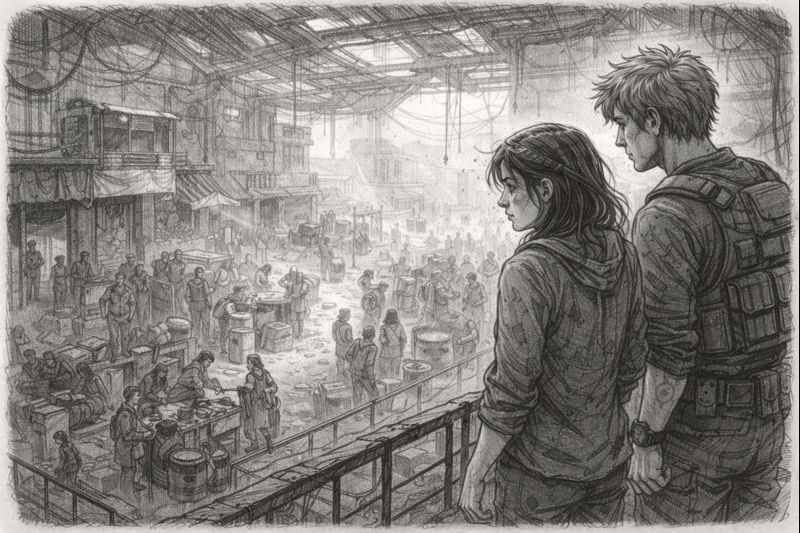
As we entered a rusted building, I looked up.
The ceiling had collapsed completely, opening the structure to the sky. Gray daylight spilled in through broken ribs of steel and concrete, filtering through smoke and dust, catching on suspended cables and rusted beams.
I stopped abruptly and gasped.
I had never seen the sky.
Inner Earth simulated it. Panels and projections. Artificial light cycles calibrated to productivity and sleep regulation. The sky had been something you scheduled around.
This one was uneven. Clouded. Real.
My chest tightened in a way I didn’t expect.
The Shadow noticed.
“I’ve never seen the sky,” I said before I could stop myself.
He glanced at me then. Not curious. Not judgmental.
“I figured.”
“It’s real,” I whispered. “The sky.”
He nodded once, like that answered something for him.
We moved again.
The Outside smelled like heat, rust, and old water. Nothing was sealed. Nothing was contained. Every surface bore marks of use, damage, or ownership. Symbols carved into walls. Painted warnings. Fabric strips tied around railings and doorframes.
The Shadows. This faction controlled the northwestern region of what used to be the United States.
I felt exposed. My clothes were wrong. Too clean. Too neutral. I had dressed for Inner Earth, where blending meant safety. Here, it marked me immediately.
I caught my reflection in a shattered panel as we passed. Pale. Unmarked. No visible scars. No color-coded stitching. No symbols worked into my sleeves.
A civilian.
A liability.
“Don’t stare,” he said quietly. “They’ll ask questions.”
I forced my eyes forward.
We passed people who didn’t look away. Men, women, and children alike watched openly. Not curious. Assessing.
No one smiled.
No one pretended not to see me.
Inner Earth had trained me to lower my eyes. To be small. To move efficiently and without friction.
Outside Earth required the opposite.
The Shadow stopped near the edge of a platform overlooking a lower level crowded with makeshift stalls, generators, and bodies pressed too close together. Power cables hung like vines. Water dripped from somewhere above into a barrel someone guarded with their life.
“Welcome home,” he said. “Where they never stopped the hunger. They just moved it.”
I frowned, my chest heavy with grief.
“They don’t show us this,” I said.
“They don’t show a lot of things,” he replied.
I watched a woman argue loudly over a ration exchange. I watched a child pull himself up onto a railing, hands already scarred.
No one hid what they were doing.
No one dressed it up in policy.
“They let the Outside absorb the overflow,” he continued. “Population. Crime. Witnesses. People who complicate projections.”
“People like me.”
The realization hit hard.
He didn’t correct me.
We stood there longer than I realized.
Something shifted in my chest. Fear, yes. But underneath it, something else.
Recognition.
I understood systems. Back home, that skill had been useful. Here, it made me dangerous.
A memory surfaced uninvited.
The execution room. The polished floor. The tablet glowing softly in an official’s hands.
Outside Earth was not chaos.
It was consequence.
“I shouldn’t have stopped,” I said quietly. “I should have just kept walking like everyone else.”
The Shadow shook his head. “You would’ve seen something else eventually.”
“I read the projections,” I said before I could stop myself.
He turned fully toward me.
“Which projections?”
“The REPR ones,” I said. “The timeline models.” I paused. “It was my job.”
He waited.
“They simulate what happens when someone stays,” I continued. “When a witness remains in a timeline they weren’t meant to survive. How events ripple. How probability bends. Where fractures start.”
I swallowed.
“My job was to read the summaries and say whether relocation reduced instability or just pushed it somewhere else.”
That did it.
The Shadow studied me differently then. Not like a liability.
Like a problem.
“That explains why they didn’t kill you,” he said.
“What.”
“Because you weren’t just in the wrong place,” he said. “You were a variable.”
The word made me cringe.
The noise swelled around us again. Life grinding forward without permission.
I wrapped my arms around myself.
The projections never talked about death. They talked about divergence. About timelines that collapsed under too much truth. About realities that couldn’t absorb what someone knew and still hold together.
I had seen the outcome before I ever saw the execution.
Killing me would have been simple.
Removing me from the timeline was safer.
Inner Earth hadn’t sent me away to protect me.
They sent me away to protect reality.
That was why reviews were never approved.
You can’t return someone once they’ve seen how fragile their world really is.
Once a timeline knows it can break, there is no going back.
What To Read More From This Author?
What The Night Kept: Chapter One
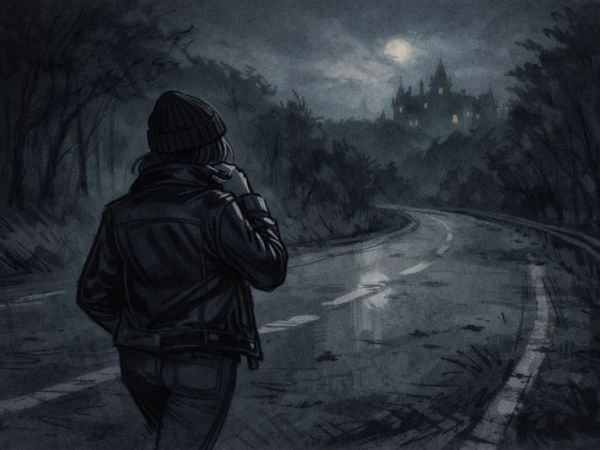
“I ran out of gas,” I said. “I don’t need much. Just a phone. Or gas. Or directions that don’t end in me getting murdered.” I laughed awkwardly, trying to break the tension.

The REPR: Chapter Seven
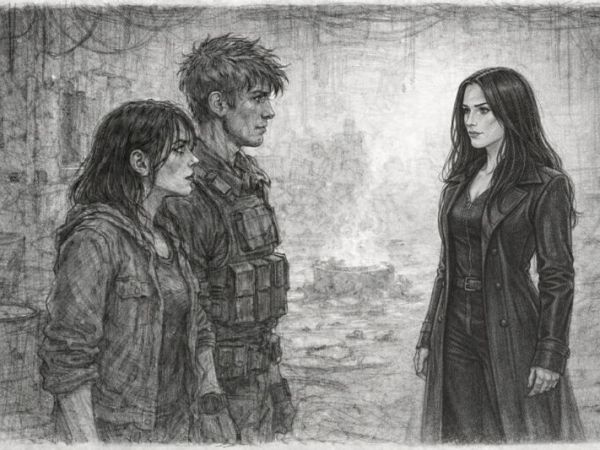
“They say a Reaper doesn’t arrive,” he continued. “Reality just… corrects around them. Noise drops. Patterns shift. If you’re meant to die, you don’t even know they were there.” “And if you’re not?” I asked. He exhaled slowly. “Then you get reassigned.”
The REPR: Chapter Six
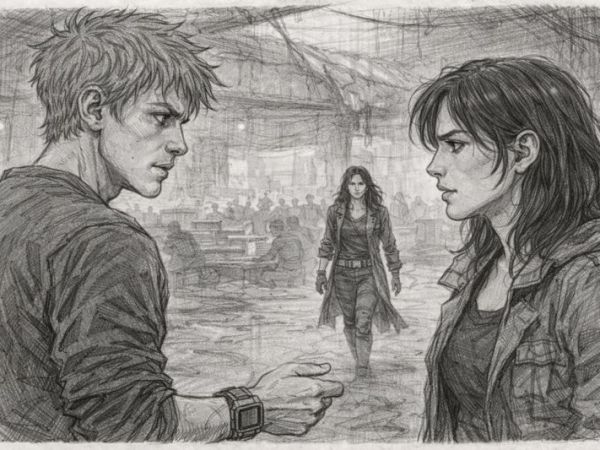
The Shadow smirked devilishly as a woman with long black hair emerged from behind a large rusted pillar and began approaching us, “Because this one is the original.”
 Lost Earth Press